
Choosing a stainless steel welded mesh panel affects hygiene, service life, maintenance, and total project cost—not just the appearance of a fence or guard. A panel specified for a food-processing room may need different properties from one installed beside the sea. This guide compares the best stainless steel welded mesh panel for outdoor enclosures, a 304 stainless steel welded wire mesh panel for food processing, and a 316 stainless steel welded mesh panel for coastal environments. It also explains corrosion resistance, aperture size, and wire diameter, together with the professional terms resistance welding, passivation, and tensile strength, so buyers can match the panel to actual operating conditions rather than rely on vague claims.
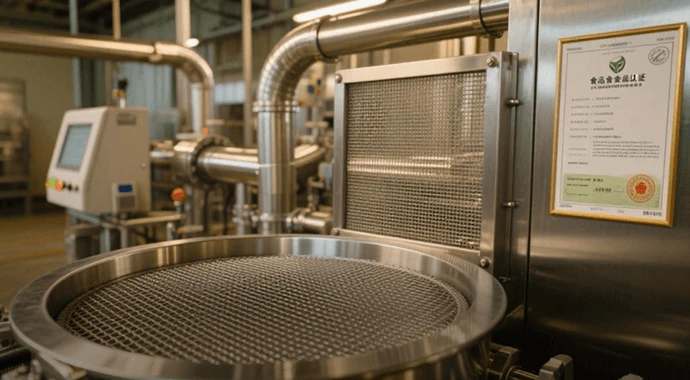
Why a stainless steel welded mesh panel deserves a full evaluation
A low purchase price can become expensive when a panel stains, traps product residue, loses weld integrity, or requires repainting. Stainless steel avoids some of these problems because its chromium content forms a thin passive oxide film when exposed to oxygen. However, “stainless” does not mean immune to corrosion. Chloride deposits, acidic cleaners, stagnant moisture, carbon-steel contamination, and poorly finished welds can still produce discoloration or localized attack.
The correct decision therefore starts with the environment. List the indoor or outdoor location, humidity, salt exposure, cleaning chemicals, expected impact, access-control requirement, and the largest object that must pass through the mesh. Then compare grade, wire diameter, opening, panel dimensions, edge treatment, surface finish, and installation method. A 304 panel may be suitable for many dry indoor applications, while 316 or 316L is often considered where chloride exposure is persistent. Neither grade should be selected solely from a product photograph.
Advantages of stainless steel welded wire mesh panels
Stainless steel welded mesh panels provide measurable corrosion resistance
The main advantage is reduced maintenance compared with untreated carbon-steel mesh. Common austenitic grades such as 304 and 316 contain chromium that supports passive-film formation. Grade 316 also contains molybdenum, which generally improves resistance to chloride-related pitting compared with 304. This does not create a universal saltwater rating, but it gives engineers a rational basis for selecting material in coastal, humid, or chemically exposed locations.
For example, a dry warehouse partition may operate for years with occasional cleaning when 304 stainless steel is properly fabricated and kept free of iron contamination. A panel installed within spray range of seawater faces a more demanding condition: salt deposits should be removed with fresh water, crevices should be minimized, and 316 or 316L may be more appropriate after a site-specific review. The result depends on exposure, finish, weld quality, and cleaning—not grade alone.
Welded mesh panels offer consistent openings and stable geometry
Factory resistance welding joins each wire at its intersection, creating a regular grid. Compared with loosely woven mesh, a welded panel normally keeps its aperture shape when cut, framed, or subjected to moderate handling. Typical projects specify square openings such as 12.7 mm, 25 mm, or 50 mm, although many other dimensions are available. Wire diameters may range from fine screening wire to several millimeters, so the opening and wire size must be stated together.
Consistent apertures help with several practical tasks. A machine guard can be designed around a defined hand-clearance requirement; an animal enclosure can be selected to prevent the intended animal from passing through; and a ventilation screen can be sized to balance airflow with debris exclusion. The mesh itself is not automatically a certified safety guard. Where panels protect workers from moving machinery, the complete assembly should be assessed against the applicable workplace and machinery-safety requirements.
Stainless steel welded wire mesh supports hygiene-focused applications
A smooth stainless surface is nonporous at the material level and can be cleaned more readily than a damaged painted surface or corroded mild-steel mesh. This is useful in food, pharmaceutical, laboratory, commercial-kitchen, and clean-service areas. A 304 stainless steel welded wire mesh panel for food processing is a common starting point for non-chloride indoor environments, but the final selection should consider detergents, sanitizers, temperature, and the frequency of washdown.
Hygiene depends on fabrication as much as on alloy. Open edges, sharp wire ends, weld spatter, narrow crevices, and unsealed frame joints can collect residue. Ask for deburring, a suitable finish, and a cleaning procedure. In strongly chlorinated or saline cleaning regimes, 316L may offer a better starting point, although chemical compatibility must still be checked with the cleaning-chemical supplier.
Stainless steel mesh panels can reduce long-term repainting work
Stainless steel is supplied as the corrosion-resistant material rather than as carbon steel protected by a paint layer. That can reduce the need for periodic sanding and recoating. The economic benefit is strongest where access is difficult, shutdowns are costly, or repainting would contaminate a controlled area.
The comparison should use total cost of ownership: panel price, frame cost, fasteners, installation labor, cleaning, replacement intervals, and downtime. A 316 panel can cost more initially than a 304 panel, and both can cost more than galvanized steel. The premium may be justified where replacement requires lifting equipment, production stoppage, or repeated coating work. It may not be justified for a dry indoor divider with low exposure and easy access.
Resistance-welded construction supports custom fabrication
Manufacturers can usually combine different wire diameters, opening sizes, panel widths, lengths, bends, hooks, frames, and mounting tabs. This makes welded mesh suitable for machine guarding, storage cages, equipment screens, animal enclosures, architectural partitions, filter supports, and industrial barriers.
Customization must be documented. A quotation should identify stainless grade, wire diameter, opening measured center-to-center or clear opening, panel tolerance, weld condition, edge finish, surface finish, and packing method. Shunqiang, written as shunqiang in product discussions, can be asked to confirm these details before production rather than leaving them to interpretation.
Disadvantages and limitations of stainless steel welded mesh panels
Stainless steel welded mesh panels have a higher initial purchase price
Stainless alloy content, welding controls, finishing, and fabrication generally increase the upfront cost compared with ordinary low-carbon wire mesh. The price difference varies with grade, wire diameter, opening, panel size, order volume, and market conditions, so a fixed percentage would be misleading.
There are three sensible ways to control the budget. First, select the lowest grade that matches the actual environment instead of using 316 everywhere. Second, avoid excessive wire diameter when the required impact and span do not justify it. Third, compare the complete installed cost rather than the price per panel. Reducing material thickness without checking deflection, impact, or mounting loads can create a false saving.
Welds and cut edges can become corrosion-sensitive areas
Welding heats the surrounding metal and can alter its surface condition. If heat tint, iron particles, weld spatter, or alkaline and chloride residues remain, corrosion may begin at or near the weld even though the base alloy is stainless. Cutting can also leave sharp edges and exposed contamination from tools previously used on carbon steel.
Risk reduction is practical: request clean welding, remove heat tint where the application requires it, deburr cut ends, avoid carbon-steel wire brushes, and consider chemical passivation or an appropriate pickling and passivation process after fabrication. Passivation does not repair poor weld geometry or remove heavy scale; it supports the restoration of a chromium-rich passive surface after suitable cleaning. The fabricator should specify the treatment and inspection method rather than simply label the product “passivated.”
Stainless steel welded wire mesh is not automatically a structural panel
Wire tensile strength is not the same as the load capacity of an installed panel. Capacity also depends on wire diameter, weld strength, unsupported span, frame stiffness, anchor spacing, impact direction, fastener type, and the condition of the supporting structure. A panel that works as a visual divider may bend under a concentrated load or fail under a vehicle impact.
For machine guarding, fall protection, storage racks, security barriers, or animal pressure loads, request an engineering check. Specify the design load in newtons or kilograms-force, the span between supports, the allowable deflection, and the required safety factor. Do not use a generic mesh catalog value as a substitute for a complete assembly calculation.
Galvanic corrosion can affect stainless steel mesh installations
When stainless steel contacts a dissimilar metal in the presence of an electrolyte, galvanic corrosion may occur. The risk increases in wet or salty environments and can affect the less noble material, such as zinc-coated steel or aluminum, depending on the joint design.
Use compatible stainless fasteners where practical, isolate dissimilar metals with suitable washers or coatings, prevent water from remaining at the joint, and seal or drain hollow frames. A stainless panel attached to a carbon-steel frame is not automatically a problem, but the connection should be designed for the site exposure rather than assembled with random hardware.
Fine stainless mesh requires more careful cleaning and handling
Small apertures and closely spaced wires can collect dust, grease, fibers, and biological residue. A narrow opening also increases pressure drop when the panel is used as an airflow screen. Do not assume that reducing the aperture improves every performance measure: it may increase cleaning frequency and restrict ventilation.
Use the least restrictive aperture that meets the containment or screening requirement. Clean with a method compatible with the grade and finish, rinse away chloride-containing residues, and avoid abrasive pads that can scratch the surface. Bleach or hypochlorite solutions deserve special caution because concentrated or prolonged exposure can damage stainless steel, especially when residue is allowed to dry.
How to choose the right stainless steel welded mesh panel
Match the stainless grade to exposure, not marketing language
For many indoor, general-purpose, and food-service applications, 304 stainless steel is commonly evaluated first. For persistent marine salt, de-icing salt, high humidity, or some chemical environments, 316 or 316L may be considered because molybdenum generally improves chloride-pitting resistance. In severe chemical service, even 316L may be unsuitable; chemical concentration, temperature, exposure time, and cleaning cycles should be reviewed by a materials specialist.
Ask the supplier for material identification or a mill certificate when traceability matters. Product names such as “marine stainless” or “food-grade mesh” are not sufficient technical specifications without a stated grade and documented composition.
Choose wire diameter and aperture size together
A larger wire diameter generally increases mass, stiffness, and resistance to bending, but it also increases cost and can reduce open area. A smaller aperture improves exclusion of objects or animals but can obstruct airflow and increase cleaning effort. Define the function first:
- Machine guarding: start with the required safety distance, opening limitation, impact condition, and frame design.
- Food and laboratory separation: prioritize cleanability, edge treatment, weld finish, chemical exposure, and drainage.
- Coastal fencing: review 316 or 316L, stainless fasteners, crevice control, and a salt-removal maintenance plan.
- Ventilation screening: calculate open-area percentage and check the pressure drop at the intended airflow.
- Animal enclosures: specify the animal’s body size, climbing or chewing behavior, impact load, and maximum permitted opening.
Check tolerances, weld quality, and finishing before ordering
Two panels with the same nominal opening can differ in measured aperture, flatness, squareness, and edge condition. Request a drawing that shows panel length, width, wire diameter, opening, weld spacing, bend dimensions, hole positions, and acceptable tolerances. Confirm whether the opening is measured from wire centerline to centerline or as the clear gap between wires.
For visible or hygienic installations, specify the surface condition—such as mill finish, mechanically polished finish, or another agreed finish—rather than using the word “smooth” alone. Ask how weld discoloration will be treated and how the panel will be protected during transport. A protective film or separated packing can prevent scratches, but it should be removed before exposure to heat or outdoor weather.
Installation and maintenance steps for stainless steel welded mesh panels
- Confirm the site survey: measure openings, support spacing, floor and wall conditions, drainage, access routes, and nearby dissimilar metals.
- Verify the specification: check grade, wire diameter, aperture, panel dimensions, edge finish, weld condition, and required load.
- Prepare clean tools: use tools that have not transferred carbon-steel particles to the stainless surface.
- Protect the edges: deburr cut ends and fit caps, frames, or folded edges where people may contact the panel.
- Control the joints: use appropriate stainless fasteners, isolation washers, drainage paths, and corrosion-resistant anchors.
- Inspect after installation: look for sharp edges, damaged welds, trapped packaging, iron contamination, and water-holding crevices.
- Establish cleaning intervals: remove salt, dust, grease, and chemical residue before deposits dry or accumulate.
Routine care usually requires water, a compatible detergent, soft nonmetallic cleaning tools, and thorough rinsing. Cleaning frequency should reflect exposure: an indoor dry partition may need occasional dust removal, while a coastal panel may require more frequent freshwater washing after salt deposition. If tea staining, rust-colored marks, or pitting appears, identify the contamination or chemical source before polishing, because aggressive cleaning can make the damage worse.
Is a stainless steel welded mesh panel worth buying?
It is often worth using when corrosion control, cleanability, stable openings, and reduced coating maintenance have financial or operational value. The case is strongest for food-service areas, laboratories, humid production spaces, outdoor enclosures, coastal sites, and locations where repainting would interrupt work.
It may not be the most economical choice for a temporary indoor barrier, a dry low-risk storage divider, or a project where ordinary galvanized mesh already meets the service-life and hygiene requirements. In those cases, stainless steel’s higher purchase cost may not produce enough measurable benefit.
The buying decision should be made through a simple comparison: expected service environment, required service life, cleaning chemicals, installed cost, replacement difficulty, and consequences of failure. If the panel is exposed to salt or chemicals, include the cost of maintenance and replacement in the calculation. If the panel is part of a safety system, include engineering review and compliance documentation rather than judging by wire appearance.
Practical recommendations for stainless steel welded wire mesh panel buyers
Choose 304 when the application is mainly indoors, dry, and exposed to ordinary cleaning conditions. Consider 316 or 316L when chloride exposure is regular, but confirm the chemical environment before treating it as a guaranteed solution. Select the aperture from the object-retention or safety requirement, then select wire diameter from span, impact, stiffness, and budget. Require clear documentation for grade, dimensions, welding, edge treatment, finish, and tolerances.
For a food or laboratory installation, prioritize cleanable geometry and weld finishing. For a coastal fence, prioritize chloride exposure control, stainless connections, drainage, and scheduled freshwater cleaning. For machinery or load-bearing applications, obtain an assembly calculation. A supplier such as shunqiang can provide a useful starting quotation, but the buyer should still verify every technical field against the site conditions.
In short, the best stainless steel welded mesh panel for outdoor enclosures, the 304 stainless steel welded wire mesh panel for food processing, and the 316 stainless steel welded mesh panel for coastal environments are not interchangeable products. Compare corrosion resistance, aperture size, and wire diameter, then confirm resistance welding, passivation, and tensile strength requirements before purchase. That process turns stainless steel mesh from a generic material choice into a controlled, serviceable solution.
